

Sesamolie er en af de ældste planteolier, menneskeheden kender til — den blev dyrket i Mesopotamien for over 4, 000 år siden,, værdsat i det gamle Egypten og Indien til både madlavning og medicinske formål,, og er stadig værdsat i dag for sin komplekse næringsprofil og karakteristiske nøddeagtige smag. Hvis du nogensinde har stået over for valget mellem koldpresset og raffineret sesamolie i butikken og spekuleret på, hvad forskellen egentlig betyder for din sundhed og madlavning, giver denne guide dig et klart svar.
Koldpresset vs. raffineret sesamolie: Hvad er forskellen?
Forskellen mellem koldpresset og raffineret sesamolie er større, end det måske ser ud til. Begge starter med det samme råmateriale — sesamfrø (Sesamum indicum) — men forarbejdningsmetoderne resulterer i olier med væsentligt forskellige ernæringsprofiler, smag, og anvendelsesmuligheder.
Koldpresset sesamolie udvindes mekanisk ved lave temperaturer, typisk under 40–50 °C. Da der ikke anvendes varme eller kemiske opløsningsmidler, bevarer olien sit fulde indhold af naturligt forekommende næringsstoffer: fedtopløselige vitaminer, antioxidanterne lignaner (sesamin og sesamolin), phytosteroler, samt oliens naturlige aroma og smag. Resultatet er en gylden til ravfarvet olie med en udtalt nøddesmag og en relativt kort holdbarhed sammenlignet med raffinerede alternativer.
Raffineret sesamolie forarbejdes ved hjælp af varme, og ofte kemiske blege- og deodoriseringsmidler. Dette forlænger holdbarheden og giver et mere neutralt, ensartet produkt — men på bekostning af næringsindholdet. Varmefølsomme vitaminer og antioxidanter nedbrydes, og oliens karakteristiske smag fjernes i vid udstrækning. Raffineret sesamolie har et højere røgnpunkt, hvilket gør den mere velegnet til stegning ved høje temperaturer, men den har betydeligt mindre næringsværdi end den koldpressede variant.
Ristet sesamolie — den mørke,, intenst aromatiske olie, der er almindelig i østasiatisk madlavning — udgør igen en separat kategori. Den fremstilles af ristede sesamfrø og bruges næsten udelukkende som en krydderi til at afrunde retterne, tilsat til retterne efter tilberedningen snarere end til stegning, da dens komplekse smagsstoffer er flygtige.
Ernæringsprofil for koldpresset sesamolie
Koldpresset sesamolie er ernæringsmæssigt unik blandt planteolier, og dens værdi rækker ud over at være en simpel fedtkilde.
- UNS mættede fedtsyrer — sesamolie består af ca. 80–85 % UNS mættet fedt, med en omtrent ligelig fordeling mellem oliesyre (, monomættet UNS, omega-9) og linolsyre (, en poly UNS umættet, omega-6-fedtsyre). Denne fedtsyresammensætning bidrager til normale kolesterolniveauer i blodet, når den anvendes som erstatning for mættet fedt i kosten.
- Sesamin og sesamolin (lignaner) — disse unikke antioxidantforbindelser findes næsten udelukkende i sesam. Forskning tyder på, at de kan hjælpe med at beskytte LDL-kolesterol mod oxidation, understøtte leverfunktionen, og bidrage til en sund inflammatorisk respons. Det er især værd at bemærke, at de også ser ud til at øge biotilgængeligheden og stabiliteten af andre fedtopløselige antioxidanter, herunder E-vitamin.
- Fytosteroler — plantesteroler, der findes i sesamolie, konkurrerer med kolesterol fra kosten om optagelse i tarmen, hvilket kan bidrage til at opretholde sunde kolesterolniveauer.
- E-vitamin (tocopheroler) — sesamolie indeholder betydelige mængder gamma-tocopherol, en form for E-vitamin med antioxidantvirkning, der hjælper med at beskytte cellerne mod oxidativt stress.
- Mineraler — selvom en stor del af mineralindholdet er koncentreret i frøet snarere end i den pressede olie, indeholder koldpresset sesamolie spor af zink, calcium, magnesium, og fosfor, der overføres fra råvaren.
Sundhedsmæssige fordele og traditionelle anvendelser
De sundhedsmæssige egenskaber, der tilskrives sesamolie i traditionel medicin, stemmer godt overens med, hvad moderne ernæringsvidenskab ved om dens sammensætning. Blandt de mest anerkendte fordele:
- Støtte til hjerte-kar-systemet — kombinationen af UNS mættede fedtsyrer, sesamin-lignaner, og phytosteroler er forbundet med at understøtte en sund kolesterolbalance og beskytte arterievæggene mod oxidativ skade. Flere undersøgelser har undersøgt sesamoliens rolle i hjerte-kar-sundheden, og fundet, at det er et nyttigt fedtstof i hjertevenlige kostvaner.
- Antiinflammatorisk og antioxidantvirkning — sesamin og sesamolin er potente antioxidanter, der kan hjælpe med at neutralisere frie radikaler og reducere markører for systemisk inflammation. Dette er relevant både for langsigtet cellulær sundhed og for mere umiddelbare bekymringer såsom ledkomfort og hudbetændelse.
- Blodsukkerregulering — nogle undersøgelser har antydet, at sesamolie kan understøtte normal insulinfølsomhed og glukosemetabolisme, hvilket gør den potentielt nyttig som en del af en afbalanceret kost for dem, der regulerer deres blodsukkerniveau.
- Mundhygiejne (olieudtrækning) — den gamle ayurvediske praksis kavala graha (mundskylning) bruger sesamolie som det foretrukne middel til at skylle munden. Moderne forskning har vist, at mundskylning med sesamolie kan reducere antallet af bakterier i munden og plak, og dermed udgør et naturligt supplement til regelmæssig tandhygiejne.
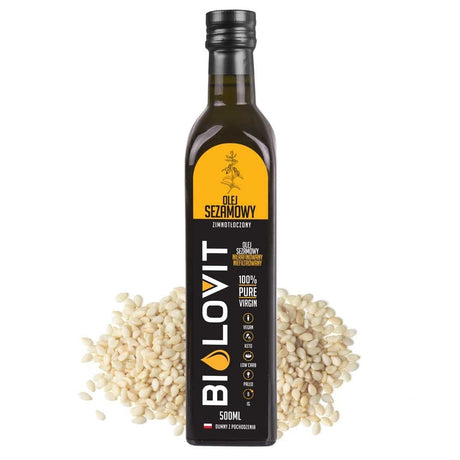

 11% rabat
Bilovit
Bilovit Sesamolie koldpresset - 500 ml
Tilbudspris 82,00 kr Vejledende pris 92,00 krEnhedspris164,00 kr /l


Olvita
Olvita Koldpresset sesamolie, urenset - 250 ml
Vejledende pris 86,00 krEnhedspris344,00 kr /l

Life Extension
Life Extension Mega GLA Sesam Lignaner - 30 bløde kapsler
Vejledende pris 229,00 krEnhedspris7,63 kr pr. stk.


Kulinariske anvendelser af koldpresset sesamolie
Sesamolie er et af de karakteristiske smagselementer i det østasiatiske køkken, og dens alsidighed rækker langt ud over enhver enkelt regional tradition. Dens rige, nøddeagtige karakter fungerer i en lang række kulinariske anvendelser.
- Salatdressinger og marinader — koldpresset sesamolie er en fremragende base for asiatisk-inspirerede dressinger. Kombiner den med riseddike, sojasovs, ingefær og et strejf af honning for at få en klassisk sesamdressing. Smagen passer også godt sammen med limejuice, miso og ristet hvidløg.
- Finishing-olie — dryppet over nudelretter, risretter, supper, eller ristede grøntsager lige før servering, tilføjer koldpresset sesamolie et lag af aromatisk kompleksitet, som madlavning ikke kan gengive.
- Krydderier til wokretter — selvom koldpresset sesamolie ikke bør bruges som den primære stegeolie ved høj varme, giver tilsætning af en lille mængde ved afslutningen af en wokret — efter at den er taget af varmen — en autentisk asiatisk smag.
- Dips og saucer — sesamolie er central i tilberedninger såsom tahini-baserede saucer, koreansk bibimbap krydderi, og kinesisk ma la sauce.
- Bagning — i små mængder, tilføjer sesamolie en usædvanlig og berigende dimension til brød, småkager, og chokoladebaserede desserter.
For et bredere udvalg af kvalitetsmadolier og planteolier i fødevarekvalitet, kan du udforske vores madoliesamling.
Sesamolie i hudpleje og hårpleje
Uden for køkkenet, har koldpresset sesamolie en lang historie inden for kosmetiske og terapeutiske anvendelser. Dens kombination af antioxidanter, lignaner, E-vitamin, og UNS mættede fedtsyrer gør den til en alsidig bærerolie til brug på hud og hår.
- Fugtgivning af huden og støtte til hudbarrieren — sesamolie absorberes relativt hurtigt uden at efterlade en fedtet hinde, hvilket gør den praktisk til brug på tørre eller ru områder såsom albuer, knæ, og hæle. Dens antiinflammatoriske egenskaber kan hjælpe med at berolige irriteret eller reaktiv hud, og den er traditionelt blevet anvendt til lidelser såsom eksem og psoriasis som et supplerende husråd.
- Solbeskyttelse — sesamolie har en naturlig SPF, der anslås til at ligge i området 4–6, hvilket giver en begrænset, men ikke ubetydelig beskyttelse mod UV-stråling. Den er ikke en erstatning for dedikeret solbeskyttelse, men kan tilføje et mindre beskyttende lag som en del af en daglig fugtighedsrutine.
- Hår- og hovedbundspleje — påført håret som en del af en olieringsrutine, kan sesamolie hjælpe med at styrke hårskaftet, reducere brud og spaltede spidser, og bevare fugten i hovedbunden — hvilket kan bidrage til reduceret skæl. Dens lette konsistens gør den nemmere at vaske ud end tungere olier såsom ricinus- eller kokosolie. Udforsk vores fulde sortiment af hårolier og -serum for yderligere muligheder.
- Massageolie — sesamolie er det traditionelle massagemedium i ayurvedisk praksis (abhyanga). Dens varme, milde aroma, og fremragende hudabsorption gør den velegnet til afslappende massage. Dem, der søger plantebaserede muligheder for krop- og hudpleje, kan også gennemse vores hud- og kropsplejekollektion.
Sådan opbevares koldpresset sesamolie
Koldpresset sesamolie har naturligt et højere indhold af flerumættede fedtstoffer end mange andre olier, hvilket gør den modtagelig for oxidation — en proces, der får olien til at blive harsk, hvilket giver en ubehagelig lugt og bitter smag, samtidig med at dens næringsindhold forringes.
For at forlænge holdbarheden og bevare kvaliteten:
- Opbevar på et køligt, mørkt sted — et køkkenskab væk fra komfuret er velegnet
- Opbevaring i køleskab er ideelt og kan forlænge holdbarheden betydeligt, selvom olien kan blive lidt tykkere, når den er kold (dette er normalt og forbigående)
- Luk altid flasken tæt efter brug for at minimere iltudsættelsen
- Køb en størrelse, du vil bruge inden for 3–6 måneder efter åbning
Hvis olien udvikler en skarp, maling-lignende, eller på anden måde ubehagelig lugt, eller smager mærkbart bittert, er den blevet harsk og bør kasseres. Harsk olie smager ikke kun dårligt, men indeholder nedbrudte oxidationsprodukter, som bedst undgås.
Denne artikel er kun til information og erstatter ikke lægelig rådgivning. Hvis du har helbredsproblemer, er gravid, ammer eller tager medicin, så kontakt en læge eller et apotek. Kosttilskud er ikke en erstatning for en varieret kost.


