

Amygdalin er kendt under flere navne. Laetrile, letril, og også vitamin B17 — det er alle betegnelser, der bruges om det samme stof, selvom den sidste teknisk set er forkert. Der findes ikke noget officielt anerkendt vitamin B17, selvom dette navn er meget udbredt. Amygdalin er ansvarlig for den bitre smag, der findes i kernerne fra kirsebær, blommer, abrikoser, ferskner, og sødkirsebær. Det blev først identificeret i det 19. århundrede, og blev populært på grund af dets påståede kræftbekæmpende egenskaber. Men tilbyder vitamin B17 virkelig en alternativ tilgang inden for onkologi?
Hvad er amygdalin?
Amygdalin er et glykosid — en naturligt forekommende forbindelse, der findes i planter. Det er det stof, der er ansvarligt for den karakteristiske bitre smag, man mærker, når man spiser frugt tæt på stenen. De højeste koncentrationer findes i bitre mandelkerner, men der findes også betydelige mængder i kernerne fra kvæde, abrikos, blomme, kirsebær, og fersken. Ud over stenfrugter, forekommer amygdalin i bælgfrugter såsom valske bønner, kidneybønner, kikærter, og linser. Det findes også i bær som brombær og aronia, samt i hørfrø, sesamfrø, bambusskud, og brun ris. Macadamianødder og cashewnødder er blandt de rigeste kilder i nødder.
Hvis du er interesseret i plantebaserede forbindelser og deres rolle i velvære, kan du også udforske vores udvalg af urtetilskud, der indeholder koncentrerede botaniske ekstrakter.
Amygdalin — Egenskaber og virkningsmekanisme
I menneskekroppen, gennemgår amygdalin en række kemiske reaktioner og nedbrydes til sidst til blåsyre (hydrogencyanid), glukose, og benzaldehyd. To af disse nedbrydningsprodukter — hydrogencyanid og benzaldehyd — kan i for store mængder have en negativ indvirkning på kroppen og kan endda føre til alvorlig forgiftning. Dette er en vigtig sikkerhedsmæssig overvejelse, som ikke bør overses.
Tilhængere af alternative onkologiske tilgange er uenige i denne vurdering. Ifølge deres teori nedbrydes amygdalin til disse potentielt skadelige forbindelser kun i kræftceller, hvorved sunde celler forbliver upåvirkede. De antyder, at et enzym kaldet beta-glukosidase gør det muligt for hydrogencyanid at trænge ind i syge celler, hvilket giver benzaldehyd mulighed for at ødelægge dem indefra. Ifølge denne teori, vil vitamin B17 ikke kun angribe muterede celler, men også hjælpe med at forhindre metastaser ved at forkorte de berørte cellers levetid. Tilhængere hævder, at amygdalin kan virke både terapeutisk og forebyggende mod kræft.
Den videnskabelige virkelighed er dog mere nuanceret. Forskere har påpeget, at kræftceller indeholder utilstrækkelige mængder af det nødvendige enzym til at optage amygdalin i meningsfulde mængder. Kun spor af stoffet når muligvis frem til kræftcellerne — ikke nok til at ødelægge dem — mens det resterende stof potentielt kan skade sundt væv.
Hvad siger forskningen?
Den videnskabelige dokumentation for amygdalin og kræft er blandet og ikke entydig. Nogle studier har observeret en langsommere vækst af tyktarmskræftceller i laboratorieforhold. Andre har undersøgt dets potentielle rolle i støtte til behandling af prostatakræft, og et dyreforsøg på rotter antydede en mulig indflydelse på behandling af brysttumorer. Men, sideløbende med disse fund, har talrige undersøgelser vist absolut ingen effekt på kræftbehandling, forebyggelse, eller progression.
Indtil der gennemføres yderligere grundig klinisk forskning, er det umuligt at fastslå endeligt, om amygdalin har nogen reel indvirkning på kræftceller. Det står dog klart, at dette stof har vakt betydelig videnskabelig nysgerrighed, og den igangværende forskning kan i sidste ende give mere entydige svar. For dem, der er interesseret i https://medpak.shop/collections/antioxidants med bedre dokumenterede beviser, findes der mange velundersøgte muligheder.
Amygdalin — Dosering
Der er ingen universelt aftalt dosering for amygdalin, hvilket afspejler den fortsatte videnskabelige usikkerhed omkring dette stof. Til generelle forebyggende formål, foreslår nogle behandlere at indarbejde små mængder malede frugtfrø i kosten. Men, når det kommer til kræftrelateret brug, er situationen langt mere kompleks og bør aldrig påbegyndes uden lægelig overvågning.
Som et eksempel, har Dr. Contreras fra Oasis of Hope Hospital foreslået en trinvis tilgang: seks 500 mg tabletter dagligt i 21 dage i fase et, fire 500 mg tabletter dagligt i fase to, og en fortsættelse af fase to eller en reduktion til forebyggende mængder i fase tre. Andre forskere indtager en mere konservativ holdning, og anbefaler ikke mere end en til to frø om dagen udelukkende til generelle velværeformål, mens de fraråder terapeutisk dosering helt.
Kosttilskudsformer af amygdalin, såsom dem der fås i kapselform, indeholder typisk meget lavere doser (på omkring 4 mg) og er beregnet til dem, der Wish ønsker at inkludere dette stof som en del af et bredere kosttilskudsrutine.
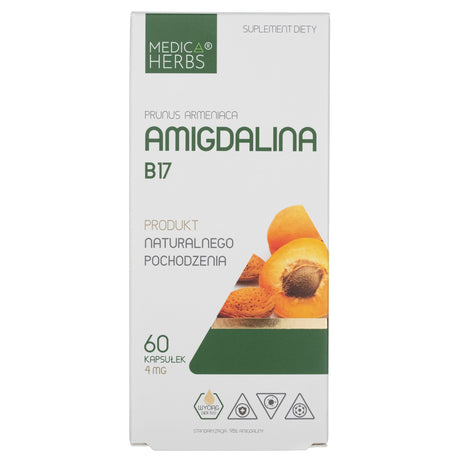


Medica Herbs
Medica Herbs Amigdalin B17 4 mg - 60 kapsler
Vejledende pris 51,69 krEnhedspris0,86 kr pr. stk.


Vitaler's
Vitaler's Amygdalin (Vitamin B17) 4 mg - 120 kapsler
Vejledende pris 78,09 krEnhedspris0,65 kr pr. stk.


Amygdalin — Kontraindikationer og sikkerhed
Påbegyndelse af amygdalin-tilskud bør altid drøftes med en læge, især i forbindelse med en kræftdiagnose. Selvmedicinering med dette stof kan have alvorlige konsekvenser, især hvis det får nogen til at opgive konventionel onkologisk behandling til fordel for alternative tilgange.
Amygdalin anbefales generelt ikke til personer med hjerte-kar-sygdomme, da præparater indeholdende dette stof kan sænke blodtrykket. Det kan også forringe fordøjelsesfunktionen, hvilket potentielt kan føre til fordøjelsesbesvær, halsbrand, mavesmerter, oppustethed, og kvalme. I tilfælde af malabsorptionssyndrom, kan amygdalin yderligere reducere optagelsen af andre værdifulde næringsstoffer.
Det er også vigtigt at bemærke, at amygdalin kan interagere med andre lægemidler. Indtagelse sammen med ascorbinsyre (vitamin C), for eksempel, kan øge risikoen for bivirkninger. Af denne grund, bør enhver beslutning om at tage amygdalin som kosttilskud træffes i samråd med en sundhedsperson, der kan vurdere potentielle interaktioner med eksisterende medicin og helbredstilstande.
Hovedpointe
Amygdalin, ofte benævnt vitamin B17, er et fascinerende plantebaseret stof, der længe har vakt interesse i alternative sundhedskredse. Selvom nogle foreløbige undersøgelser antyder potentielle egenskaber, der er værd at udforske, understøtter den videnskabelige konsensus i øjeblikket ikke brugen af det som kræftbehandling. Hvis du vælger at tage amygdalin som kosttilskud, skal du gøre det ansvarligt — i lave doser, under lægeligt tilsyn, og aldrig som erstatning for dokumenterede medicinske behandlinger.
Denne artikel er kun til information og erstatter ikke lægelig rådgivning. Hvis du har helbredsproblemer, er gravid, ammer eller tager medicin, så kontakt en læge eller et apotek. Kosttilskud er ikke en erstatning for en varieret kost.


